
Air Force: Airplane Combat Guide: Dogfight Energy Management, Angle-of-Attack & Weapon Tuning
Complete guide and studio overview for Air Force: Airplane Combat Guide: Dogfight Energy Management, Angle-of-Attack & Weapon Tuning, verified by CafeGms Studio for mobile players and web publishers.
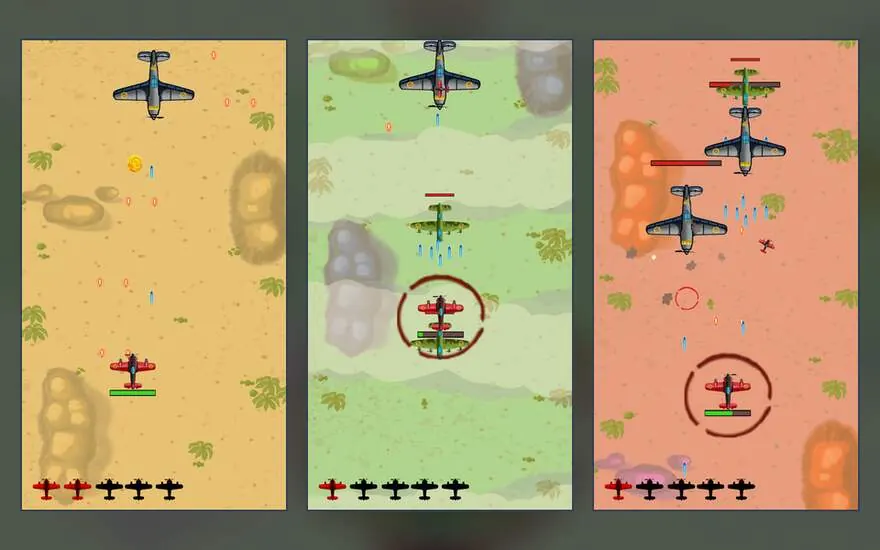
1. Kinetic Energy vs Potential Altitude: The Corner Velocity Rule
Many players hold the afterburner continuously, mistakenly equating raw velocity with aerial dominance. In real combat flight modeling, maximum turning rate occurs at a specific calibrated airspeed known as "Corner Velocity".
Operating above or below corner velocity drastically widens your turning radius, allowing enemy interceptors to easily slip onto your six o'clock position. Maintain your throttle at 70% to 75% when initiating high-G bank turns.
- Altitude is stored potential speed: Dive toward sea level to convert gravitational potential into instantaneous burst acceleration for missile evasion.
- Climb into cloud cover to break infrared heat-seeker lock-on signals from ground anti-aircraft batteries.
2. Evading Radar-Guided Surface-to-Air Missiles (SAMs)
When the missile lock warning indicator flashes amber, turning away in a straight line will result in interception. Modern SAM tracking computes lead pursuit algorithms.
To defeat incoming missiles, execute the "Notching Maneuver": bank your aircraft exactly 90 degrees relative to the missile's inbound trajectory and deploy countermeasure flares. This blends your radar return signature into ground clutter, forcing the guidance computer to break lock.
3. Anti-Aircraft Flak Corridor & Carrier Deck Precision
Later Pacific theater missions shift from open-sky dogfights into heavily defended naval convoys protected by overlapping cruiser flak batteries and radar-guided turrets. Flying straight down the center of a destroyer lane invites predictable lead-shot fire; instead, weave laterally along crisp S-turns at 30-degree bank offsets so flak shells detonate cleanly behind your tail section.
- Prioritize Escort AA Before Dive-Strike Carriers: Neutralizing outer escort craft on your first sweeping pass strips crossfire pressure, giving you an uncontested approach vector when lining up heavy ordnance drops against capital ship decks.
- Throttle Down During Micro-Weaves: Briefly easing airspeed before entering dense bullet curtains tightens your effective turn radius while keeping machine-gun bursts trained longer on critical wing fuel tanks.
4. Squad Upgrade Priority & Ace Medal Benchmarks
| Upgrade Subsystem | Recommended Priority | Combat Impact in Late Stages |
|---|---|---|
| Wing Cannon Spread & Fire Rate | 1st (Highest) | Clears escort fighter waves rapidly before they complete flanking passes behind you. |
| Engine Afterburner & Agility | 2nd | Extends barrel-roll invulnerability recovery and speeds recovery after steep dives. |
| Armor Plating & Repair Kit | 3rd | Absorbs stray shrapnel chips during multi-boss battleship sieges without resetting score multipliers. |
05. Carrier Launch Positioning, Squadron Priority & Endurance Scoring
Maximizing stage scores across Operation Pacific Dawn demands proactive target triage rather than chasing edge-of-screen stragglers. Prioritize radar-guided heavy torpedo craft and flak barges spawning along carrier lanes first, because leaving them intact floods the lower screen third with overlapping crossfire patterns right before elite interceptor wings arrive.
Preserve invulnerable barrel-roll activations strictly for unavoidable laser sweeps or boxed wall formations, using steady micro-banking to weave between standard tracer lines. Mastering ammo overcharge pickups raises hull burst damage dramatically when diving straight into the Iron Valkyrie dorsal core during narrow shield downtime windows.
- Coordinated Squadron Sweep Timing: Wait for synchronized escort formations to align vertically before unleashing wing-mounted overcharge rockets so every salvos clears two rows simultaneously.
- High-Value Heavy Craft First: Removing heavy cruisers early keeps open sky clear for clean dogfight maneuvering.
- Flare Discipline: Wait until homing missiles commit to final terminal velocity before popping decoy countermeasures.
- Edge Buffer Margin: Avoid hugging top or bottom screen borders where sudden wave spawns can catch tail engines.